Across Albany, Clifton Park, and Saratoga Springs, building classification plays a major role in how projects are designed, approved, and insured. The seven construction types determine fire protection requirements, structural limits, and compliance standards within commercial construction environments.
Why Building Type Drives Compliance
Construction type determines required fire-resistance ratings for walls, floors, columns, and structural framing.
Commercial buildings face stricter inspection checkpoints due to occupancy and life-safety considerations.
These requirements are shaped by model building codes published by the International Code Council, which guide structural and life-safety expectations nationwide.
Type I – Fire-Resistive Construction
Fire-resistive Type I construction is used where height, occupancy load, and structural durability are critical.
Structural elements are usually reinforced concrete or protected structural steel, often rated for two to three hours of fire resistance. In downtown Albany, multi-story commercial office buildings frequently fall into this classification.
Although more expensive, Type I construction enables larger vertical development and higher occupancy allowances.
Type II – Non-Combustible Construction
Type II classification relies on steel, masonry, and concrete components that do not ignite easily.
This type is common in retail centers, warehouses, and commercial plazas throughout Clifton Park and surrounding Albany suburbs.
Compared to Type I, fire ratings may be lower, but structural integrity remains strong.
Type III – Ordinary Construction
Type III construction features non-combustible exterior walls with combustible interior framing.
Renovation projects in Albany often involve upgrading Type III buildings to meet modern occupancy requirements.
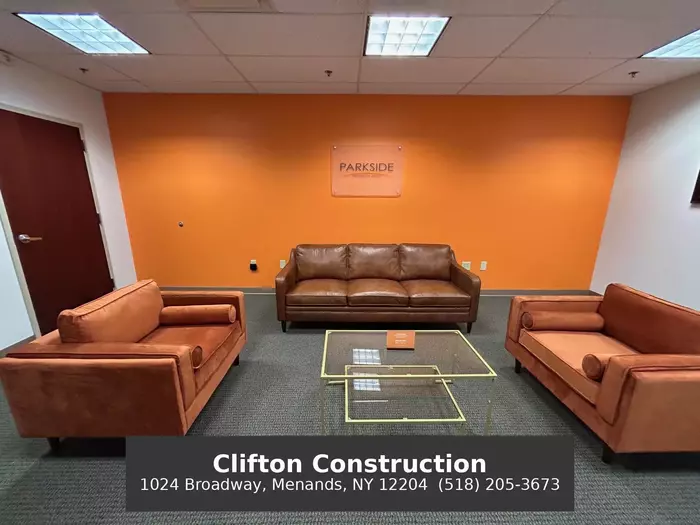
Occupancy changes can trigger new egress, fire alarm, and suppression requirements.
Type IV – Heavy Timber Construction
Type IV construction, also known as heavy timber, uses large solid wood members that char slowly under fire exposure.
Although less common in Albany high-rise commercial work, heavy timber appears in specialty mixed-use or architecturally focused developments.
Engineering calculations must confirm structural capacity under load and fire conditions.
Type V – Wood-Framed Construction
Wood-framed systems define Type V buildings.
While economical, Type V buildings face height and area limitations commercial remodeling compared to non-combustible classifications.
Modern Combination Construction
Hybrid construction integrates multiple material types within one compliance framework.
These systems must still align with one of the primary classifications under code review.
Local Code Enforcement and Inspection Sequencing
Local municipalities evaluate structural classification before issuing permits.
Businesses frequently search for commercial construction company near me in Albany NY to ensure classification and compliance requirements are properly handled.
An experienced commercial general contractor coordinates structural documentation, fireproofing inspections, and final approval sequencing.
Conclusion
Understanding building type improves planning accuracy and compliance readiness.
For commercial projects in Albany and throughout the Capital Region, visit Clifton Development Group.
Clifton Construction
(518) 205-3673
1024 Broadway, Menands, NY 12204
https://www.cliftondevelopmentgroup.com